In the modern industrial world, air compressors are crucial equipment supporting various production processes. Optimal air compressor performance not only impacts productivity but also directly impacts operational efficiency and company costs. Therefore, implementing preventive maintenance is crucial to ensure the compressed air system is always in optimal condition.
What is Preventive Maintenance?
Preventive maintenance is scheduled maintenance performed to prevent damage or disruption to equipment before problems arise. Unlike corrective maintenance, which is performed after damage has occurred, preventive maintenance focuses on prevention, minimizing the risk of downtime.
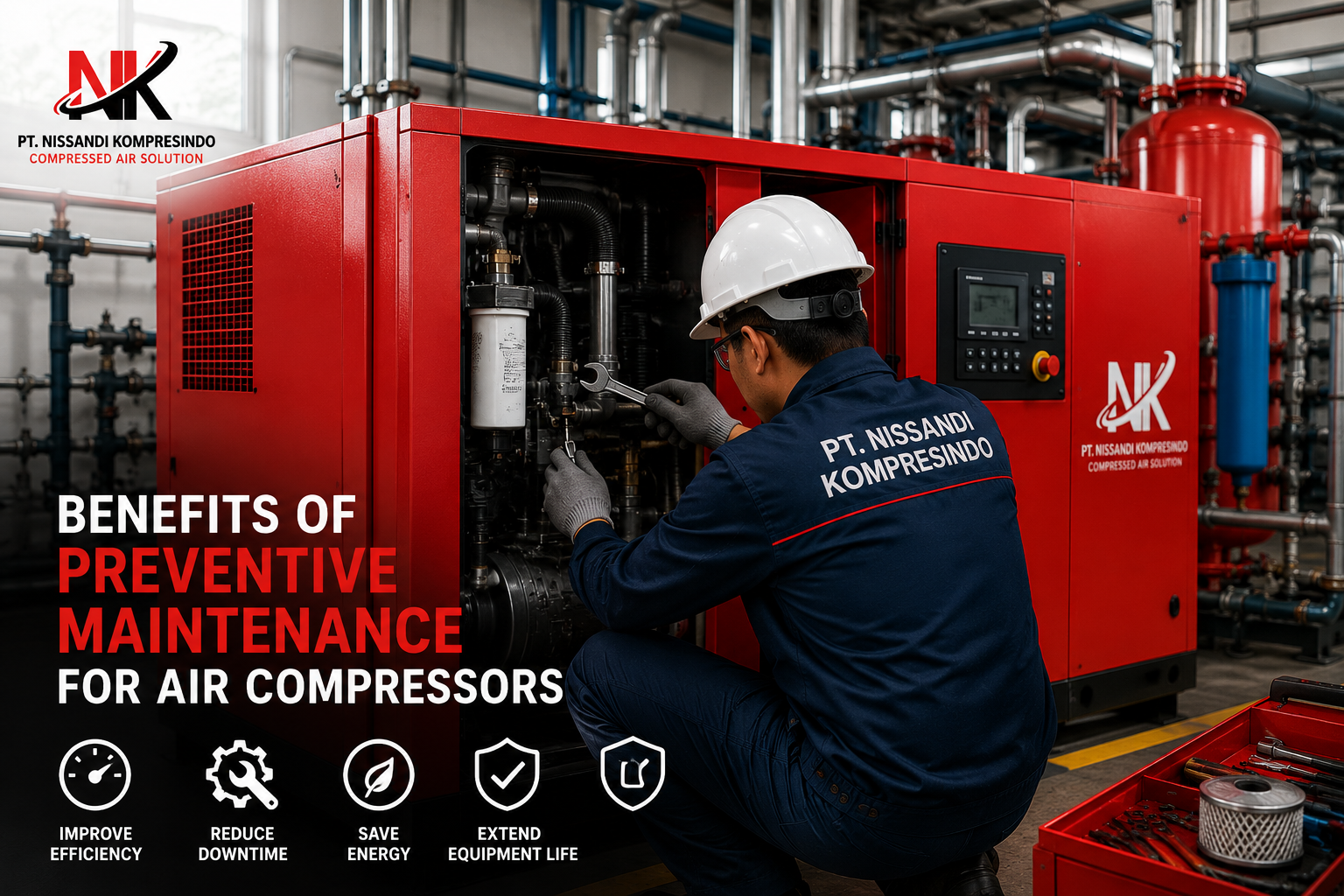
For air compressors, preventive maintenance typically includes component inspections, filter replacements, oil checks, cooling system inspections, air leak checks, and control system calibration.
Benefits of Air Compressor Preventive Maintenance
1. Improved Operational Efficiency
A well-maintained air compressor is able to operate at optimal performance and produce stable air pressure. This helps production processes run more smoothly without disruptions that could hinder company operations.
2. Reducing the Risk of Downtime
Sudden damage to an air compressor can cause production interruptions and result in significant losses. With preventive maintenance, potential damage can be detected early so that repairs can be taken before system failure occurs.
3. Saving Energy Consumption
Poorly maintained compressed air systems often experience decreased efficiency and require more energy to produce the same air pressure. Regular maintenance helps maintain machine performance, thus maintaining efficient electricity consumption and reducing operational costs.
4. Extending Equipment Lifespan
Components that are regularly inspected and maintained will have a longer service life. Replacing parts before they experience major damage can prevent chain damage to other components.
5. Maintaining Compressed Air Quality
In some industries, compressed air quality significantly impacts the quality of the final product. Clean filters and a well-maintained system will help produce air that is free from contamination by oil, dust, and excess moisture.
6. Reducing Major Repair Costs
The cost of preventive maintenance is generally much lower than the cost of repairs due to major damage or replacing the entire unit. By performing routine maintenance, companies can avoid unexpected expenses that can burden the operational budget.
7. Improve Work Safety
Damaged equipment has the potential to pose a safety risk to operators and the work environment. Preventive maintenance helps ensure all components are functioning properly, thus minimizing the risk of workplace accidents.
Components That Require Regular Inspection
Some key components that require attention in a preventive maintenance program include:
- Air filter
- Oil filter
- Separator element
- Compressor oil
- Cooling system
- Belt and coupling
- Pressure valve
- Control system and sensors
- Air distribution pipe
- Air dryer and filter line
Regular inspections of these components can help maintain the overall performance of the compressed air system.
Conclusion
Preventive maintenance is not just routine maintenance activities, but a long-term investment to maintain the reliability, efficiency, and lifespan of air compressors. With scheduled maintenance performed by experienced technicians, companies can reduce the risk of downtime, save operational costs, and ensure smooth production processes.
PT Nissandi Kompresindo provides professional preventive maintenance services for various types of industrial air compressors. With the support of experienced technicians and high service standards, we are ready to help maintain the optimal performance of your compressed air system.