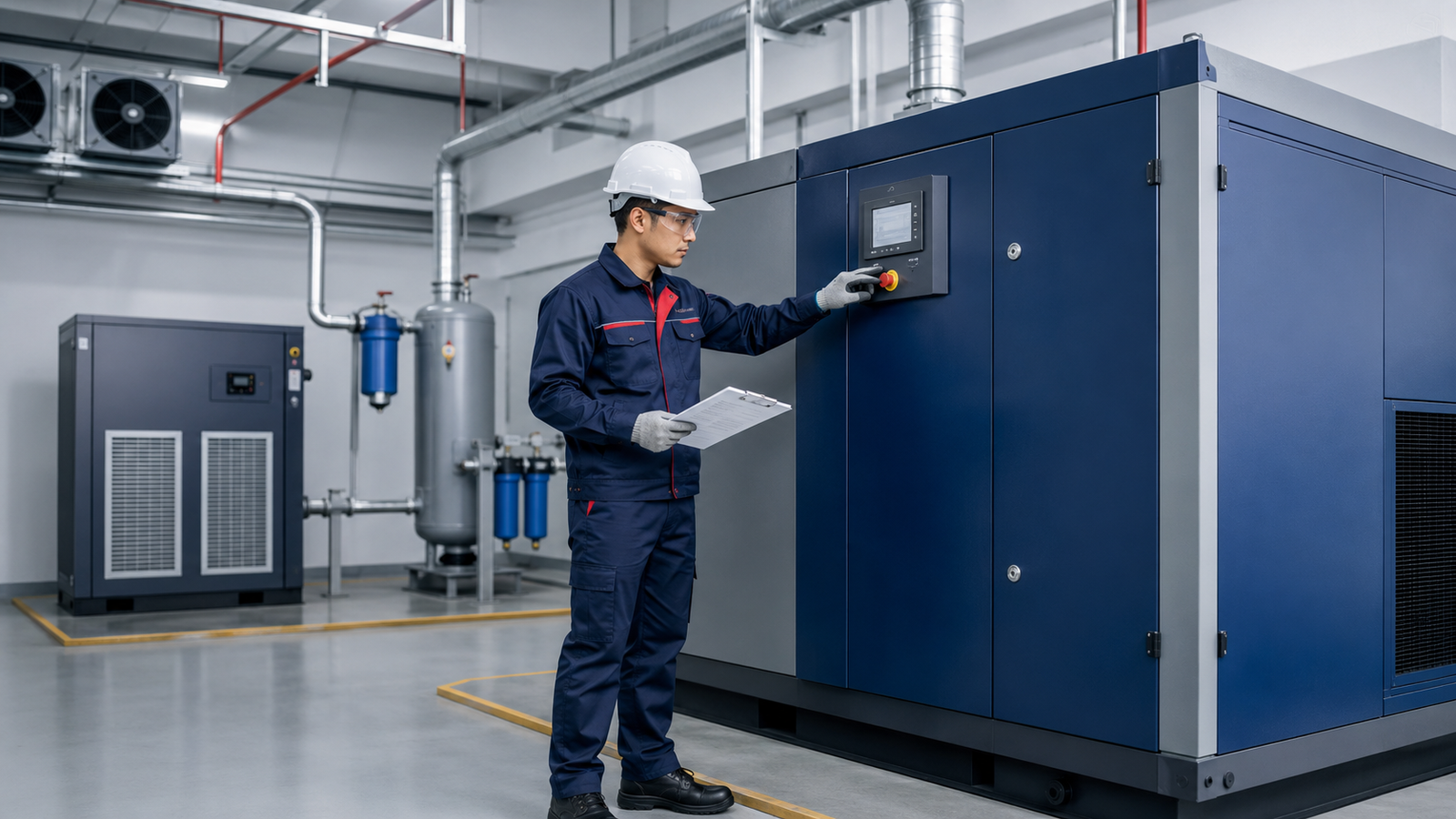
Memilih air compressor untuk kebutuhan pabrik tidak cukup hanya dengan melihat kapasitas motor atau horsepower (HP). Compressor yang terlalu kecil dapat menyebabkan tekanan udara tidak mencukupi, sementara compressor yang terlalu besar dapat meningkatkan biaya investasi dan konsumsi energi tanpa memberikan manfaat yang optimal.
Karena itu, sebelum membeli atau mengganti air compressor, penting untuk mengetahui berapa kebutuhan udara (air demand) dan berapa tekanan kerja yang dibutuhkan oleh sistem.
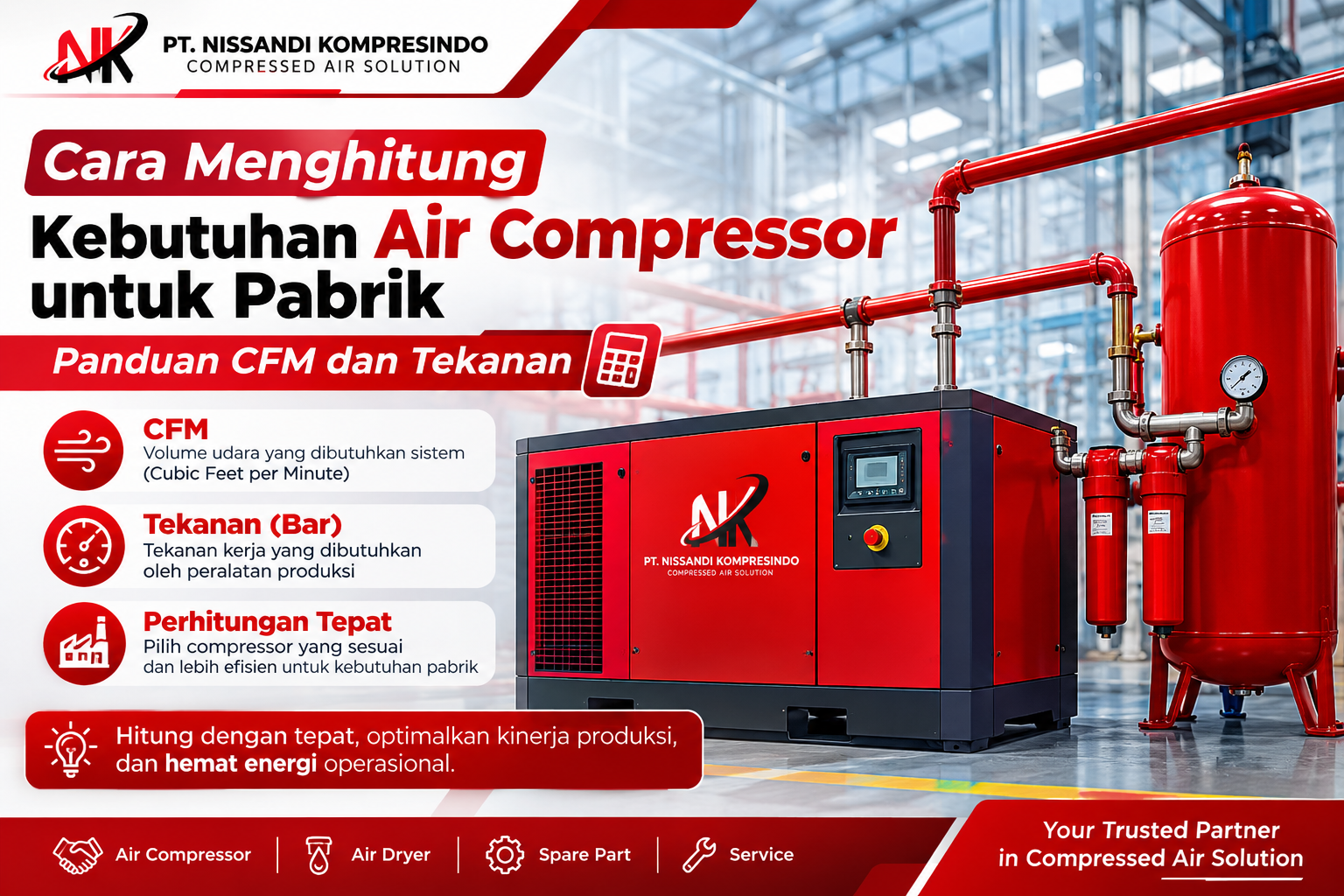
Dua parameter utama yang perlu diperhatikan adalah CFM dan tekanan kerja dalam bar.
Dalam artikel ini, kita akan membahas cara menghitung kebutuhan air compressor untuk pabrik secara sederhana, mulai dari mengumpulkan data kebutuhan udara hingga menentukan kapasitas compressor yang sesuai.
Apa Itu CFM pada Air Compressor?
CFM merupakan singkatan dari Cubic Feet per Minute, yaitu satuan yang digunakan untuk menunjukkan volume udara yang dapat disuplai oleh compressor dalam satu menit.
Semakin besar kebutuhan udara dari peralatan di dalam pabrik, semakin besar pula kapasitas compressor yang dibutuhkan.
Sebagai contoh, apabila sebuah mesin membutuhkan 20 CFM dan mesin lainnya membutuhkan 15 CFM, maka kebutuhan udara teoritisnya adalah:
20 CFM + 15 CFM = 35 CFM
Namun, angka 35 CFM belum tentu menjadi kapasitas compressor yang harus dibeli karena masih perlu mempertimbangkan pola penggunaan peralatan dan cadangan kapasitas.
Apa Itu Tekanan Kerja atau Bar?
Selain kapasitas udara, kita juga perlu mengetahui tekanan yang dibutuhkan oleh peralatan.
Tekanan biasanya dinyatakan dalam bar atau psi.
Sebagai contoh:
- Pneumatic cylinder: membutuhkan tekanan tertentu sesuai spesifikasi
- Air blow gun: membutuhkan tekanan sesuai kebutuhan proses
- Pneumatic tools: membutuhkan tekanan kerja sesuai spesifikasi alat
- Mesin produksi: mengikuti tekanan minimum yang ditentukan oleh manufacturer
Jika sebagian besar peralatan membutuhkan tekanan kerja sekitar 6 bar, maka sistem compressed air harus mampu menyediakan tekanan tersebut secara stabil di titik penggunaan.
Perlu diperhatikan bahwa CFM dan tekanan adalah dua hal yang berbeda.
Compressor dengan CFM besar belum tentu cocok apabila tekanannya tidak sesuai. Sebaliknya, compressor dengan tekanan tinggi belum tentu mampu menyediakan volume udara yang cukup untuk seluruh peralatan.
Data yang Perlu Dikumpulkan Sebelum Menghitung Kebutuhan Compressor
Sebelum menentukan kapasitas compressor, kumpulkan terlebih dahulu data dari seluruh peralatan yang menggunakan compressed air.
Beberapa data penting antara lain:
- Jumlah peralatan
- Kebutuhan udara masing-masing peralatan
- Tekanan kerja masing-masing peralatan
- Durasi penggunaan
- Apakah peralatan digunakan secara bersamaan
- Kebutuhan udara untuk proses produksi
- Potensi kebocoran pada sistem piping
- Rencana penambahan mesin di masa depan
Data tersebut akan membantu menghasilkan perhitungan yang lebih realistis.
Cara Menghitung Total Kebutuhan CFM
Cara paling sederhana adalah menjumlahkan kebutuhan udara dari seluruh peralatan.
Misalnya sebuah pabrik memiliki beberapa peralatan pneumatic:
| Peralatan |
Jumlah |
Kebutuhan Udara |
Total |
| Pneumatic Machine A |
2 |
10 CFM |
20 CFM |
| Pneumatic Machine B |
2 |
8 CFM |
16 CFM |
| Air Blow Gun |
2 |
5 CFM |
10 CFM |
| Pneumatic Tool |
1 |
12 CFM |
12 CFM |
| Total |
|
|
58 CFM |
Dari tabel tersebut, kebutuhan udara teoritis adalah:
58 CFM
Namun, bukan berarti kita harus langsung memilih compressor dengan kapasitas tepat 58 CFM.
Masih ada beberapa faktor yang harus diperhitungkan.
Perhatikan Apakah Semua Peralatan Beroperasi Bersamaan
Salah satu kesalahan dalam menghitung kebutuhan compressor adalah menjumlahkan seluruh konsumsi udara tanpa mempertimbangkan pola operasi.
Misalnya terdapat 10 mesin yang masing-masing membutuhkan 10 CFM.
Jika seluruh mesin memang dapat beroperasi secara bersamaan, maka kebutuhan udara dapat mendekati:
10 × 10 CFM = 100 CFM
Tetapi jika hanya sekitar 70% mesin yang biasanya beroperasi secara bersamaan, kebutuhan aktual dapat berbeda.
Karena itu, informasi mengenai operating pattern sangat penting dalam menentukan kapasitas compressor.
Untuk instalasi industri, perhitungan sebaiknya tidak hanya mengandalkan perkiraan. Data aktual dari masing-masing mesin dan kondisi operasional perlu diperiksa agar kapasitas compressor tidak undersized maupun oversized.
Tambahkan Safety Margin
Setelah mengetahui kebutuhan udara, biasanya diperlukan cadangan kapasitas untuk mengantisipasi perubahan kebutuhan sistem.
Misalnya kebutuhan udara adalah:
58 CFM
Jika digunakan cadangan kapasitas 15%, maka:
58 CFM × 15% = 8,7 CFM
Sehingga kebutuhan setelah penambahan margin:
58 + 8,7 = 66,7 CFM
Dengan demikian, kapasitas compressor yang dipilih sebaiknya berada di atas kebutuhan tersebut dan tetap disesuaikan dengan kapasitas unit yang tersedia serta kondisi sistem.
Safety margin tidak seharusnya digunakan secara berlebihan. Compressor yang terlalu besar dapat menyebabkan sistem bekerja tidak efisien, terutama pada aplikasi dengan kebutuhan udara yang berubah-ubah.
Jangan Lupakan Kebocoran Compressed Air
Kebocoran merupakan salah satu faktor yang sering diabaikan ketika menghitung kebutuhan compressor.
Kebocoran dapat terjadi pada:
- Sambungan pipa
- Fitting
- Selang
- Valve
- Quick coupling
- Regulator
- Drain
- Connection pada pneumatic equipment
Meskipun satu titik kebocoran terlihat kecil, banyak titik kebocoran dalam satu sistem dapat menghasilkan kehilangan udara yang signifikan.
Akibatnya compressor harus bekerja lebih lama untuk mempertahankan tekanan sistem.
Karena itu, sebelum menentukan kapasitas compressor, kondisi instalasi compressed air juga perlu diperiksa.
Bagaimana Menentukan Tekanan Compressor?
Setelah mengetahui kebutuhan CFM, langkah berikutnya adalah menentukan tekanan kerja.
Misalnya peralatan produksi membutuhkan tekanan minimum 6 bar.
Bukan berarti compressor harus selalu disetel tepat 6 bar.
Kita juga harus mempertimbangkan adanya pressure drop sepanjang sistem distribusi.
Pressure drop dapat terjadi akibat:
- Pipa terlalu kecil
- Pipa terlalu panjang
- Terlalu banyak elbow
- Filter tersumbat
- Dryer tidak sesuai kapasitas
- Fitting terlalu kecil
- Piping tidak dirancang dengan baik
Sebagai contoh sederhana, apabila peralatan membutuhkan 6 bar tetapi terjadi pressure drop pada sistem distribusi, maka tekanan pada outlet compressor harus memungkinkan tekanan di titik penggunaan tetap memenuhi kebutuhan mesin.
Namun, menaikkan tekanan compressor secara berlebihan juga bukan solusi terbaik karena tekanan yang lebih tinggi dapat meningkatkan konsumsi energi.
Contoh Menentukan Kebutuhan Compressor
Misalnya sebuah pabrik mempunyai kebutuhan compressed air sebagai berikut:
- Mesin produksi A: 20 CFM
- Mesin produksi B: 15 CFM
- Pneumatic tool: 10 CFM
- Air blow gun: 8 CFM
Total kebutuhan:
20 + 15 + 10 + 8 = 53 CFM
Jika kita memberikan cadangan kapasitas sebesar 15%:
53 × 15% = 7,95 CFM
Maka kebutuhan setelah margin:
53 + 7,95 = 60,95 CFM
Artinya, kita dapat mencari compressor dengan kapasitas aktual yang berada di sekitar atau di atas kebutuhan tersebut, dengan tetap melihat tekanan kerja, FAD, operating condition, dan spesifikasi unit.
Jika sistem membutuhkan tekanan kerja 6 bar, maka compressor juga harus dipilih dengan kemampuan menghasilkan tekanan yang sesuai dengan kebutuhan sistem.
Jangan Hanya Melihat Horsepower
Horsepower sering menjadi salah satu spesifikasi pertama yang dilihat ketika memilih compressor.
Contohnya:
- 10 HP
- 20 HP
- 30 HP
- 50 HP
- 75 HP
- 100 HP
Namun, HP saja tidak cukup untuk menentukan apakah compressor cocok untuk suatu aplikasi.
Dua compressor dengan horsepower yang sama belum tentu menghasilkan kapasitas udara yang sama.
Karena itu, selain HP, perhatikan juga:
- FAD atau kapasitas udara aktual
- Working pressure
- Motor power
- Efficiency
- Operating condition
- Jenis compressor
- Duty cycle
- Sistem kontrol
- Kebutuhan udara aktual
Untuk kebutuhan industri, spesifikasi teknis harus dibandingkan berdasarkan kebutuhan sistem, bukan hanya berdasarkan ukuran motor.
FAD Lebih Penting daripada Sekadar Angka CFM
Dalam memilih compressor, kita juga perlu memperhatikan istilah FAD (Free Air Delivery).
FAD menunjukkan jumlah udara bebas yang dapat disuplai compressor pada kondisi tertentu dan merupakan parameter penting untuk membandingkan kemampuan aktual compressor.
Karena kondisi pengukuran dapat berbeda antar manufacturer, spesifikasi FAD sebaiknya dibaca bersama dengan kondisi referensi pengukuran yang digunakan.
Dengan demikian, jangan hanya membandingkan angka CFM tanpa melihat bagaimana angka tersebut diperoleh.
Bagaimana Jika Kebutuhan Udara Berubah-ubah?
Tidak semua pabrik mempunyai konsumsi compressed air yang konstan.
Pada beberapa aplikasi, kebutuhan udara dapat naik dan turun sesuai aktivitas produksi.
Dalam kondisi seperti ini, pemilihan jenis compressor juga menjadi penting.
Fixed Speed Compressor dapat menjadi pilihan untuk aplikasi dengan kebutuhan udara yang relatif stabil.
Sementara itu, Variable Speed Drive (VSD) Compressor dapat dipertimbangkan untuk sistem dengan kebutuhan udara yang sering berubah karena kecepatan motor dapat disesuaikan dengan kebutuhan sistem.
Pemilihan antara fixed speed dan VSD sebaiknya dilakukan berdasarkan profil konsumsi udara, jam operasi, dan kebutuhan efisiensi energi.
Kesalahan yang Sering Terjadi Saat Menghitung Kebutuhan Compressor
Beberapa kesalahan yang sebaiknya dihindari antara lain:
1. Hanya melihat HP
HP tidak secara langsung menunjukkan kebutuhan udara sistem.
2. Tidak menghitung seluruh equipment
Semua peralatan yang menggunakan compressed air harus dimasukkan dalam perhitungan.
3. Mengabaikan pressure drop
Tekanan di compressor belum tentu sama dengan tekanan di titik penggunaan.
4. Tidak memperhitungkan kebocoran
Kebocoran dapat meningkatkan kebutuhan udara secara tidak terlihat.
5. Memberikan kapasitas terlalu besar
Oversizing dapat menyebabkan biaya investasi dan konsumsi energi menjadi tidak optimal.
6. Tidak mempertimbangkan perkembangan produksi
Jika pabrik berencana menambah mesin, kebutuhan compressed air di masa depan sebaiknya ikut dipertimbangkan.
Jadi, Berapa Kapasitas Compressor yang Dibutuhkan Pabrik?
Tidak ada satu ukuran compressor yang cocok untuk semua pabrik.
Kapasitas yang tepat bergantung pada:
Total air demand + operating pattern + pressure requirement + pressure drop + leakage + kebutuhan pengembangan sistem.
Sebagai gambaran, proses perhitungannya dapat dilakukan dengan urutan:
1. Identifikasi seluruh pengguna compressed air
↓
2. Catat kebutuhan CFM masing-masing equipment
↓
3. Tentukan equipment yang beroperasi bersamaan
↓
4. Hitung total kebutuhan udara
↓
5. Periksa kebocoran dan pressure drop
↓
6. Tambahkan margin yang wajar
↓
7. Tentukan tekanan kerja
↓
8. Pilih compressor berdasarkan FAD dan pressure
Dengan metode tersebut, pemilihan compressor menjadi lebih terukur dan sesuai dengan kebutuhan sistem.
Konsultasikan Kebutuhan Air Compressor Anda
Menentukan kapasitas air compressor untuk pabrik tidak selalu cukup hanya dengan melihat jumlah mesin atau horsepower. Kondisi aktual di lapangan, kebutuhan udara, tekanan kerja, pola penggunaan, dan sistem distribusi compressed air juga perlu dipertimbangkan.
PT. Nissandi Kompresindo menyediakan solusi untuk kebutuhan air compressor, air dryer, spare part, dan service untuk berbagai kebutuhan industri.
Jika Anda sedang merencanakan pemasangan compressor baru, penggantian unit lama, atau ingin mengevaluasi kebutuhan compressed air di fasilitas Anda, konsultasikan kebutuhan Anda dengan tim PT. Nissandi Kompresindo.
Hubungi kami untuk mendapatkan rekomendasi unit yang sesuai dengan kebutuhan sistem Anda.
📞 +62 813-2135-273
📧 info@ptnk.co.id